Gender and Development

What is Gender and Development?

Philippine Commission on Women defined Gender and Development as the development perspective and process that is participatory and empowering, equitable, sustainable, free from violence, respectful of human rights, supportive of self-determination and actualization of human potentials.

How Gender and Development started?

Gender and Development was developed in the 1980’s as an alternative to the Women in Development (WID) approach.

Unlike WID, the GAD approach is not concerned specifically with women, but with the way in which a society assigns roles, responsibilities, and expectations to both men and women.

GAD applies gender analysis to uncover the ways in which men and women work together, presenting results in neutral terms of economics and competence.

GAD focus primarily on two major frameworks, Gender Roles and Social Relations Analysis. Gender role focus on social construction of identities within the household, it also reveals the expectations from ‘maleness and femaleness’ in their relative access to resources. Social relations analysis exposes the social dimensions of hierarchical power relations imbedded in social institutions; also it’s determining influence on ‘the relative position of men and women in society. In an attempt to create gender equality, (denoting women having same opportunities as men, including ability to participate in the public sphere) GAD policies aim to redefine traditional gender role expectations.

In this video, you will get to know more about Gender and Development (GAD) and how it is important as an individual.

Gender and Development in Philippines

       Philippine Plan for Gender and Development, 1995-2025, is a National Plan that addresses, provides and pursues full equality and development for men and women. Approved and adopted by former President Fidel V. Ramos as Executive No. 273, on September 8, 1995, it is the successor of the Philippine Development Plan for Women, 1989-1992 adopted by Executive No.  348 of February 17, 1989.

       Three years after, DENR Administrative Order No. 98 – 15 dated May 27, 1998 came up as the Revised Guidelines on the Implementation of Gender and Development (GAD) Activities in the Department of Environment and Natural Resources (DENR) in order to strengthen the DENR GAD Focal Point System and accomplishing the GAD vision “Partnership of Empowered Men and Women for Sustainable Development”.

        Republic Act No. 9710, otherwise known as the Magna Carta of Women was approved on August 14, 2009 which mandates non-discriminatory and pro-gender equality and equity measures to enable women’s participation in the formulation, implementation and evaluation of policies and plan for national, regional and local development.

        A Memorandum Circular No. 2011 – 01 dated October 21, 2011 was released addressing to all Government Departments including their attached agencies, offices, bureaus, State Universalities and Colleges (SUCs), Government-Owned and Controlled Corporations (GOCCs) and all other government instrumentalities as their guidelines and procedures for the establishment, strengthening and institutionalization of the GAD Focal Point System (GFPS).

Society Before the Gender And Development

      Gender stereotypes are generalizations about the roles of each gender. Gender roles are generally neither positive nor negative, they are simply inaccurate generalizations of the male and female attributes. Since each person has individual desires, thoughts, and feelings, regardless of their gender, these stereotypes are incredibly simplistic and do not at all describe the attributes of every person of each gender.

         Here are some examples to simplify on how society works before Gender and Development was formed:

Reference:
DENR-BMB (2016), “Gender and Development”. Retrieved from URL: http://bmb.gov.ph/gender-and-development-gad

GENDER EQUALITY IN EDUCATION

What’s the challenge?

Millions of girls and young women across the world still face huge barriers to education. What are these barriers and what inspirational initiatives are working to help overcome them? How can their success be replicated to ensure that young people everywhere have the human right to education and we empower girls to the benefit of everyone?

The Millennium Development Goals

The Millennium Development Goals galvanised unprecedented efforts to meet the needs of the world’s poorest. The Third Millennium Development Goal aimed to:

  • Eliminate gender disparity in primary and secondary education, preferably by 2005, and by all levels of education no later than 2015.
  • Increase the number of paid employment in women outside of the agricultural sector.
  • Increase the number of female MPs

The good news is that almost all countries have achieved, or are close to achieving gender equality in primary education with the notable exceptions of Afghanistan and Pakistan. More girls are enrolled in primary school than ever before and in Nepal and Bangladesh the gender disparity even favours girls.

The bad news is that vast disparities still remain at higher levels of education, particularly in Africa and South Asia, drop-out rates remain high, and worldwide 126 million young people still lack basic reading and writing skills with women accounting for more than 60 per cent.

Barriers to education

  • Poverty means women and girls in many parts of the world are still forced to spend hours a day doing chores, fetching water and caring for relatives and boys sent over girls with limited funds
  • Unsafe roads leading to schools
  • Lack of sanitation facilities in schools
  • Lack of security in schools: Dramatically highlighted by Malala Yousafzai, shot by the Taliban on her way to school for speaking out about education rights, and the kidnapping this year of 276 school girls by the militant Islamist movement Boko Haram and the resulting Bring Back Our Girls campaign.
  • Sexual violence and discrimination and are not allowed to continue school if they become pregnant or forced into child marriage.
  • Lack of female role models
  • A tradition and culture of not valuing girls education

The benefits of educating girls
There are many benefits of educating girls. These include:

  • Education increases the likelihood that women will look after their own wellbeing along with that of their family.
  • Educated women in rural areas are more likely to participate in decision-making and are less likely to suffer from domestic violence.
  • Education gives women access to better economic opportunities, provides empowerment and enables women to have control over their lives and exert influence in society.

Employment

Because of barriers, globally women still enter the job market on an unequal basis to men, hold less secure jobs, and have fewer rights to land ownership and opportunities outside the agricultural sector. Women are typically paid less and have less financial and social security than men and globally only one quarter of senior officials or managers are women.

Women perform 66% of the world’s work, and produce 50% of the food, yet earn only 10% of the income and own 1% of the property.

Gaining equal access to employment opportunities outside of the agricultural sector will increase the income and property gained by women. It has also been shown that women usually invest a higher proportion of their earnings in their families and communities than men. The largest improvements in employment have been made in Latin America and the Caribbean. (Sources: Worldbank, OECD, FAO)

Government

Better news can be seen for the target’s third indicator of increasing the number of female MPs. Globally, women’s political participation has increased, largely thanks to quotas and by the end of 2013, only five chambers worldwide had no women in parliament, but glass ceilings remain.

Political participation among women has increased. Globally women now make up 18.6 percent of parliamentarians. In January 2014 more than 30 per cent of members of parliament in at least one chamber were women in 46 countries.  (Sources: OECD,  Global Urban Development, UN Women)

Rwanda was the first country in the world to elect more women parliamentarians than men and now has the highest number of female parliamentarians in the world at 56.3%.

Reference:
rgsibgpolicy (2018), “Gender Equality in Education”.Retrieved from URL: https://21stcenturychallenges.org/gender-equality/

GAD Importance in ICT

Gender equality is considered a critical element in achieving Decent Work for All Women and Men, in order to effect social and institutional change that leads to sustainable development with equity and growth. Gender equality refers to equal rights, responsibilities and opportunities that all persons should enjoy, regardless of whether one is born male or female.

For women the world over, information and communication technologies (ICT) can be leveraged for personal security, better access to education and jobs, financial inclusion or to access basic healthcare information. But benefits such as these rely on women having meaningful access to ICT which can be facilitated or prevented by several factors, including affordability, relevant content, skills and security.

In the context of the world of work, equality between women and men includes the following elements:

Equality of opportunity and treatment in employment
Equal remuneration for work of equal value
Equal access to safe and healthy working environments and to social security
Equality in association and collective bargaining
Equality in obtaining meaningful career development
A balance between work and home life that is fair to both women and men
Equal participation in decision-making at all levels

Three reasons why GAD matters in ICT

1. Opportunity
The Internet is a great enabler, creating unprecedented opportunities for female entrepreneurs to enter global markets for the first time. ICT provides opportunities to boost small business growth by establishing an international, level-playing field that enables all businesses, regardless of size, location or sector, to compete on an equal footing in global markets. Programmes through partnerships can help realise the opportunities ICT can offer, by boosting skilling,equipping women with digital devices and providing training that helps women teach their respective communities how to make the most of these tools. Today’s side event will highlight the importance of multistakeholder collaboration in these efforts and showcase business initiatives that are using ICT to support women’s participation in the workforce and aid financial inclusion.


2. Capacity
ICT can give women access to basic needs such as healthcare and education. The private sector plays a pivotal role in investing in community-oriented training, deploying infrastructure and delivering a wide range of ICT services to meet these needs. A recently published ICC policy paper on ICT, Policy and Sustainable Economic Development, to be shared at the event, underscores that for countries to enhance the use of enabling technology for the goal goals they must create an enabling environment for sustainable investment.


3. Understanding
Women are currently less likely than men to use or own digital technologies, with gaps larger among youth and those over 45 years old. ICT improves efficiency, enhances coordination and improves the quality of information gathered and shared for development planning. For countries to leverage ICT to promote the empowerment of women, governments need to be well-informed about how the ICT ecosystem works in practice, the barriers to access and how challenges can be overcome. ICC aims to raise awareness of the impact that policies on infrastructure, applications, services and user-engagement have on the ICT ecosystem and believes greater understanding of these issues can equip policymakers with a framework to identify appropriate policy approaches.

Given that women are usually in a disadvantaged position in the workplace compared to men, promotion of gender equality implies explicit attention to women’s needs and perspectives. At the same time, there are also significant negative effects of unequal power relations and expectations on men and boys due to stereotyping about what it means to be a male. Instead, both women and men, and boys and girls, should be free to develop their abilities and make choices – without limitations set by rigid gender roles and prejudices – based on personal interests and capacities.

The ILO has adopted an integrated approach to gender equality and decent work. This means working to enhance equal employment opportunities through measures that also aim to improve women’s access to education, skills training and healthcare – while taking women’s role in the care economy adequately into account. Examples of these include implementing measures to help workers balance work and family responsibilities, and providing workplace incentives for the provision of childcare and parental leave.

Reference:
https://iccwbo.org/media-wall/news-speeches/3-reasons-ict-matters-gender-equality/?fbclid=IwAR2kN98akA1iF2fmV9VqDiyIoedvrcW86DiGhK19iZLPtwnEQVJDSJNn22I

Gender and Development in Workplace

Men and women have had trouble communicating effectively since the beginning of time, and it’s not just in the workplace. In fact, the differences between the genders have long been the topic of debate and the subject of many books. When it comes to the workplace, however, it’s not important that you even try to understand the differences between the genders. That’s an exhaustive subject that someone would probably never fully comprehend anyway. It is critical, though, that you learn the skills needed to work together in harmony, and practice effective communication.

Gender Issues in the Workplace

Although you might not like to hear that women are still discriminated against in the workplace, it’s a fact. It’s true that women now get positions formerly held by only men. And it’s true that most men have respect for professional women in the workplace and no longer hold the “cave man” belief that women belong at home, raising kids and cooking meals. However, discrepancies between men and women – and some amount of discrimination – still exists.

Common Gender Stereotypes

Stereotypes cause a lot of misconceptions in the workplace. It doesn’t matter if we’re talking about gender, race, or color. As with any stereotype, gender stereotypes prevent effective communication between men and women. They can even create friction and discord, which lessens company morale and productivity.

Listed below are some common stereotypes about women in the workplace. Again, these are stereotypes. They also highlight the differences between the ways men are viewed in the workplace, as opposed to women.

1. Women aren’t as experienced in sports as men, so they can’t be as good team players.
2. Women aren’t committed to their work, because of family obligations.
3. Women don’t work well with other women, because they’re catty.
4. Women are the primary source of gossip in a workplace.
5. Women are so emotional.

So far in this section, we’ve talked about how women can be negatively portrayed in the workplace, but they are not the only ones. Men can be unfairly portrayed, too. While the stereotypes pinned on the female gender can make a woman seem not as capable, devoted, or qualified, the stereotypes cast on men can make them seem like inhuman perverts, only out for their own success and satisfaction.

Here are a few of the stereotypes that are applied to the male gender in the workplace:

1. Men are focused on their careers.
2. Family takes second place.
3. Men aren’t emotional. In other words, they don’t care about anyone’s feelings.
4. Men can’t treat attractive female colleagues as equals, because they only view them as sex objects.
5. Men will never see women as their equals in the workplace, because they don’t want them to be.
6. Men are all part of the “good ole boys” club and always help each other get promotions – over other women colleagues.

Gender equality is considered a critical element in achieving Decent Work for All Women and Men, in order to effect social and institutional change that leads to sustainable development with equity and growth. Gender equality refers to equal rights, responsibilities and opportunities that all persons should enjoy, regardless of whether one is born male or female.

In the context of the world of work, equality between women and men includes the following elements:

1. Equality of opportunity and treatment in employment
2. Equal remuneration for work of equal value
3. Equal access to safe and healthy working environments and to social security
4. Equality in association and collective bargaining
5. Equality in obtaining meaningful career development
6. A balance between work and home life that is fair to both women and men
7. Equal participation in decision-making at all levels

Given that women are usually in a disadvantaged position in the workplace compared to men, promotion of gender equality implies explicit attention to women’s needs and perspectives. At the same time, there are also significant negative effects of unequal power relations and expectations on men and boys due to stereotyping about what it means to be a male. Instead, both women and men, and boys and girls, should be free to develop their abilities and make choices – without limitations set by rigid gender roles and prejudices – based on personal interests and capacities.

The ILO (International Labour Organization) has adopted an integrated approach to gender equality and decent work. This means working to enhance equal employment opportunities through measures that also aim to improve women’s access to education, skills training and healthcare – while taking women’s role in the care economy adequately into account. Examples of these include implementing measures to help workers balance work and family responsibilities, and providing workplace incentives for the provision of childcare and parental leave.

The truth is, men and women are in the workplace for the same reason: to advance their career and earn a living. How they choose to do so depends on many factors including education, culture, behavior, and goals – just to name a few. Even though the genders may communicate differently and do things a little differently at times, that doesn’t mean that they’re not equal and equally committed to the task at hand, their job, and their career

Reference:

https://www-ilo-org.com/global/topics/economic-and-social-development/gender-and-development/

https://www-universalclass-com./articles/business/dealing-with-gender-issues-in-the-workplace

A Glimpse of the Lives of the People in the LGBT Community

LGBT Rights

People around the world face violence and inequality—and sometimes torture, even execution—because of who they love, how they look, or who they are. Sexual orientation and gender identity are integral aspects of our selves and should never lead to discrimination or abuse. Human Rights Watch works for lesbian, gay, bisexual, and transgender peoples’ rights, and with activists representing a multiplicity of identities and issues. We document and expose abuses based on sexual orientation and gender identity worldwide, including torture, killing and executions, arrests under unjust laws, unequal treatment, censorship, medical abuses, discrimination in health and jobs and housing, domestic violence, abuses against children, and denial of family rights and recognition. We advocate for laws and policies that will protect everyone’s dignity. We work for a world where all people can enjoy their rights fully.

Reference
https://www.hrw.org/topic/lgbt-rights

FPTI: helping young women in the Philippines pursue their dreams

“We work with local partners in the Philippines to ensure that women and girls from disadvantaged backgrounds have a route out of poverty through education”

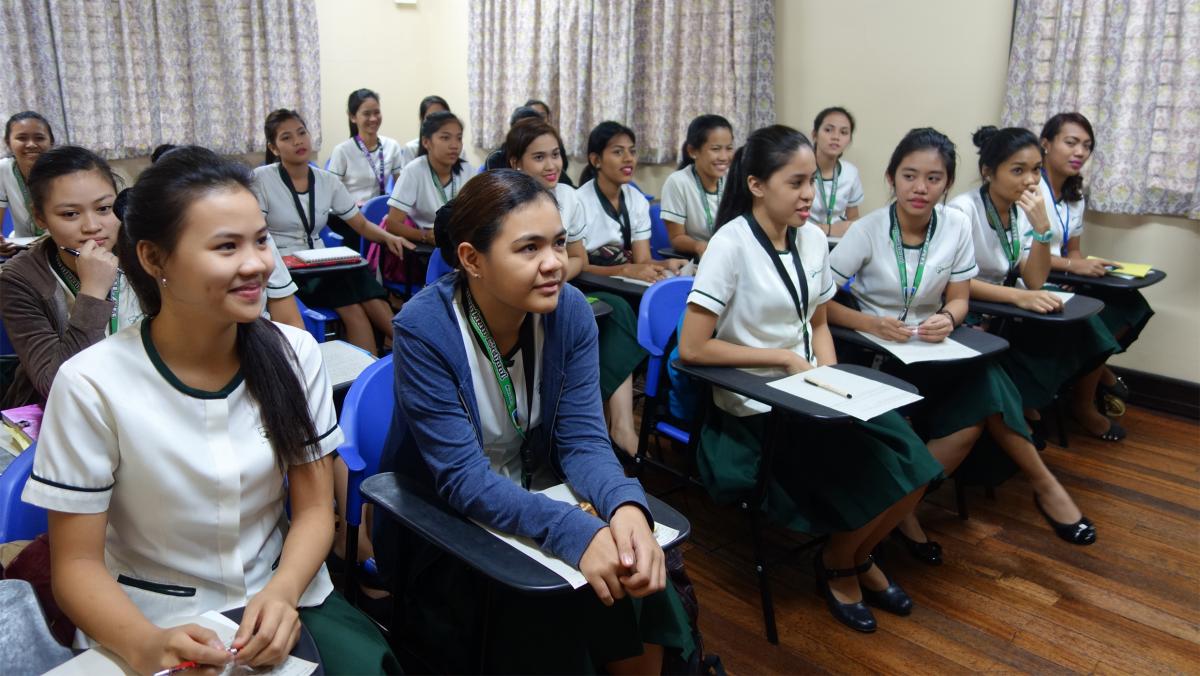
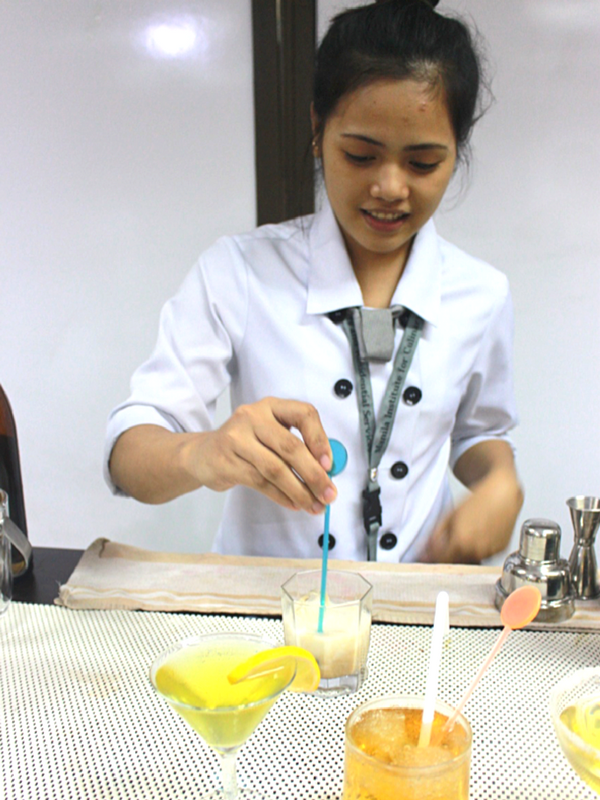
Our key partner in the Philippines, Foundation for Professional Training Incorporated (FPTI), operate schools across Manila, Cebu, and Calabarzon to help women and girls from poor families to gain skills in hospitality, management and business, leading to higher quality employment.

Students at FPTI schools divide their studies equally between the classroom and working in industry, which ensures their employability. In fact, the schools boast a 98% graduate employment rate and many students are even offered jobs before graduation. While studying, students also receive one-to-one mentoring which means that they are supported through the huge changes that they go through in their quest to become excellent professionals, while balancing studies with their home lives and families’ need for financial support.

The course and subsequent employment can then have a real impact on the student’s family, enabling her to fund the education of younger family members and even help to lift her relatives out of poverty.   Wonder is also working with FPTI’s Anihan Technical School to ensure that there are facilities for the next generation of students. The school is currently working to upgrade and expand its facilities through a building programme, increasing their annual capacity from 120 to 250 students.

Reference:
Wonder Foundation (2018), “Helping young women in the Philippines pursue their dreams”.Retrieved from URL: https://bit.ly/2CyhVHm

“Young feminists”


Picture credit: UN Women/Sahand Minae. Young women march to end violence against women in Montevideo, Uruguay, 2017.

Today, 24.6 per cent of the world’s population is aged between 10 and 24. Almost nine out of ten live in less-developed countries. In many countries, youth populations make up over half or even two-thirds of their total: 56 per cent of the population in Guatemala is under the age of 25, 63 per cent in Afghanistan, and 67 per cent in Mali.  But if you’re young, your voice isn’t fully heard in your family, community or nation: all too often, you’re expected to defer to older people and have your decisions made for you. Down the ages, both young women and men have questioned this, challenging injustices, championing change, and asserting their right to play a full part in shaping today and tomorrow.

During the past decade alone, young activists have agitated for change through powerful social movements including the global Occupy Movements, the Arab Spring, the Umbrella Revolution in Hong Kong, Los Indignados in Spain, Y’en en marre in Senegal, le Balai Citoyen in Burkina Faso, and Lucha in the Democratic Republic of Congo, to name just a few. In these movements, young women are to be found alongside young men, agitating for change.

But in a world where (older) men are still seen as natural leaders, the sight of young women marching on the streets, demanding space and voice, is too much for many. Their bravery is often punished through violence, harassment and abuse – not only from the men who oppose them, but from men ‘on their side’. And that’s why young women need feminism. In their article on young women activists in Myanmar, Agatha Ma, Poe Ei Phyu and Catriona Knapman explore their experiences and emphasise the courage it takes to step out of the submissive role young women are expected to take.

Young feminists are adopting innovative strategies to push back against resurgent patriarchal power, challenging social norms about female submission and passivity, outing sexual violence while holding perpetrators to account, asserting sexual and reproductive rights, and campaigning for political, economic and social empowerment.

And young feminists are committed to living their values. In their article, Devi Leiper O’Malley and Ruby Johnson of FRIDA/Young Feminist Fund explore what they call a ‘young feminist new order’ – exploring why young feminists work the way they do. Young feminists see themselves as part of a wider movement for social justice, aware of the importance of inclusivity and intersectionality. Their work is about challenging the dominant, hierarchical power that’s familiar the world over. They’re calling for a radically different world founded on principles of participation, empowerment, collaboration, power-sharing, and feminist leadership.

What’s the main message of this issue for international development policymakers and practitioners who want to learn from young feminists? It’s about getting young people, and young women in particular, into the driving seat of development. In her article, Rosie Walters focuses on a North-South development project focusing on ‘girls’ to deliver development. Yes, young women need education and economic opportunities. But what’s also needed is real change at a legal and political level to enable young women to flourish and challenge boundaries without taking extreme risks. Rosie’s case study shows young women  – in both South and North –  subverting development and shifting it up a gear, putting feminism at the heart. Young feminists are fighting against the odds and finding a way through.

Reference:
Davies and Sweetman (2018), “Young feminists, new feminisms”. Retrieved from URL: http://www.genderanddevelopment.org/uncategorized/young-feminists-new-feminisms/